
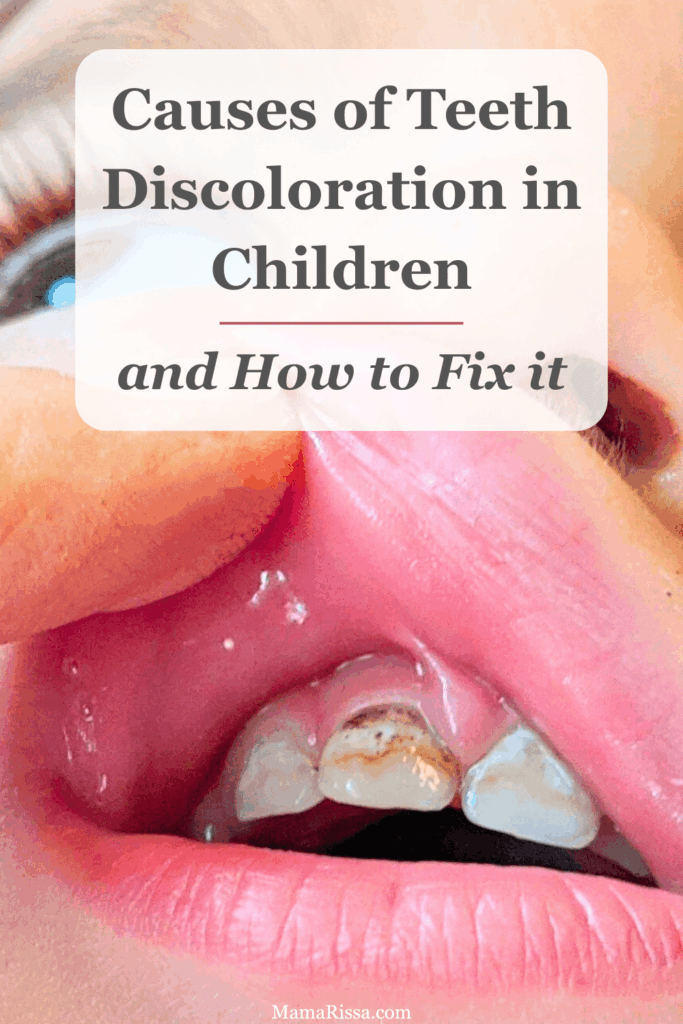
I have a lot parents in my Facebook group for Parents of Young Children with Tooth Decay concerned about the staining and appearance of their children’s teeth as a result of decay, hypoplasia or sometimes unknown reasons. This article is written by orthodontist, Dr. Satish Pai. (check out his bio at the bottom of the page), who shares some insight into the various causes and treatments for teeth discoloration in children.
Hey Mama, if you find my blog posts helpful, would you help support this blog by making purchases through product links on this page? It will not cost you any extra but the commissions I receive as an Amazon and brand affiliate help to cover the costs of operating this blog so that I can keep it running ad-free. Thank you so much for your support. You are literally the reason this blog was started and the fuel that motivates me to keep it going!
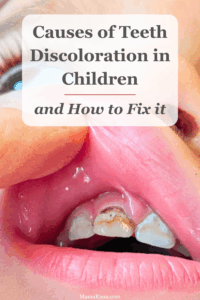
Smiling, happy kids are a parent’s joy and wish! But, along with a happy smile, a healthy smile is as important. This means your child’s oral hygiene plays a big role in their life. Young children can sometimes get stains on their teeth, even at an early age. Teeth discoloration in children is more common than you might think.
If you notice your child’s teeth are not as white as before, you do not need to worry. While it can be alarming sometimes, it’s usually manageable with the proper care. There are many causes of teeth discoloration in children; some are temporary and harmless, while others may point to issues that need dental attention. From brushing habits to the foods they eat, several everyday factors can affect the color of your child’s teeth.
Read along to find out the common causes of teeth discoloration in children, treatment options for discolored teeth, and simple ways to prevent teeth discoloration in children. Whether your child is still growing baby teeth or has started getting their permanent set, knowing what to look out for and how to respond can help you keep their smile bright and healthy for years to come.
Common Causes of Teeth Discoloration in Children
Even with good habits and regular brushing, some kids develop yellow, brown, or white spots on their teeth. Teeth discoloration in children is quite common, and you do not need to panic.
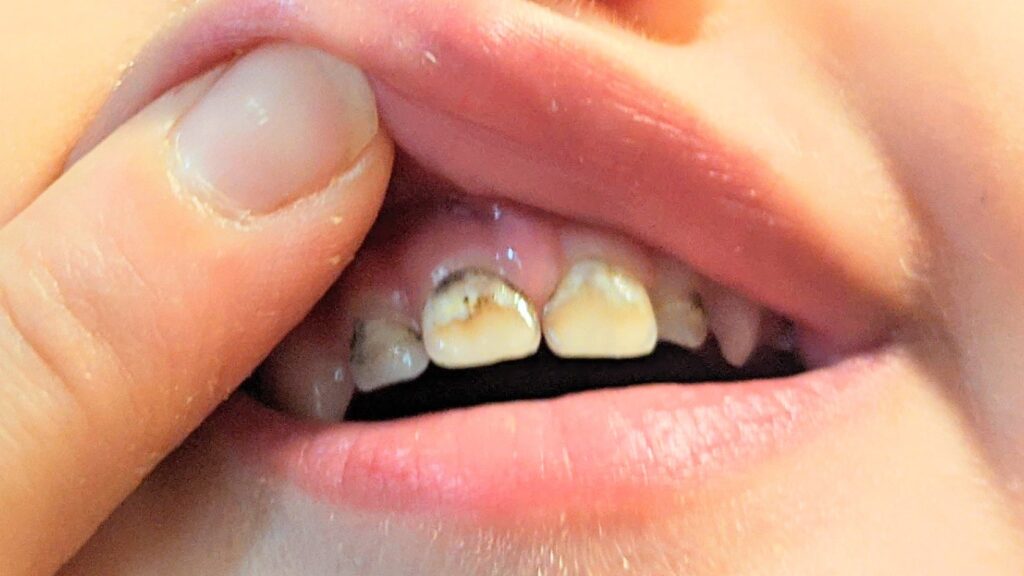
Understanding the root causes can help you tackle the problem more effectively. Some causes are harmless, while others may need a bit more attention from your dentist.
Let’s break it down:
1. Poor Oral Hygiene
Kids are not always the best brushers since they’re just learning. So one of the most common causes of teeth discoloration in kids is poor brushing habits.
Younger children often struggle with brushing thoroughly, especially around hard-to-reach areas like the back teeth and gums. This, combined with poor oral hygiene and inconsistent oral care routines, can lead to plaque and tartar buildup on the teeth, resulting in a yellow or dull appearance.
2. Staining Foods and Beverages
Many foods and drinks that kids love, like berries, grape juice, fruit punch, and soda, are packed with color. These bright pigments can stick to the surface of the teeth, leaving behind stains over time. Even if your child brushes regularly, eating or drinking these things often can make their teeth look darker or discolored.

My new website featuring kid-approved naturally sweetened recipes is LIVE! Check it out here.
3. Excessive Fluoride (Fluorosis)
Fluoride is good for teeth, but too much fluoride toothpaste or supplements during early childhood can cause white streaks or brownish spots on the enamel, a condition called fluorosis.
Find the best hydroxyapatite toothpaste option for your child here.
This usually happens if a child swallows too much toothpaste or takes extra fluoride supplements they don’t need. It’s most common while their permanent teeth are still developing under the gums.
4. Certain Medications
Some medications can cause staining in developing teeth. For example, antibiotics like tetracycline or doxycycline, if taken during pregnancy or the tooth development phase in kids, can lead to teeth that grow with a yellow or gray tint. Even iron supplements, which are sometimes given to children for anemia, can cause temporary dark stains.
However, those can often be cleaned off.
5. Tooth Trauma or Injury
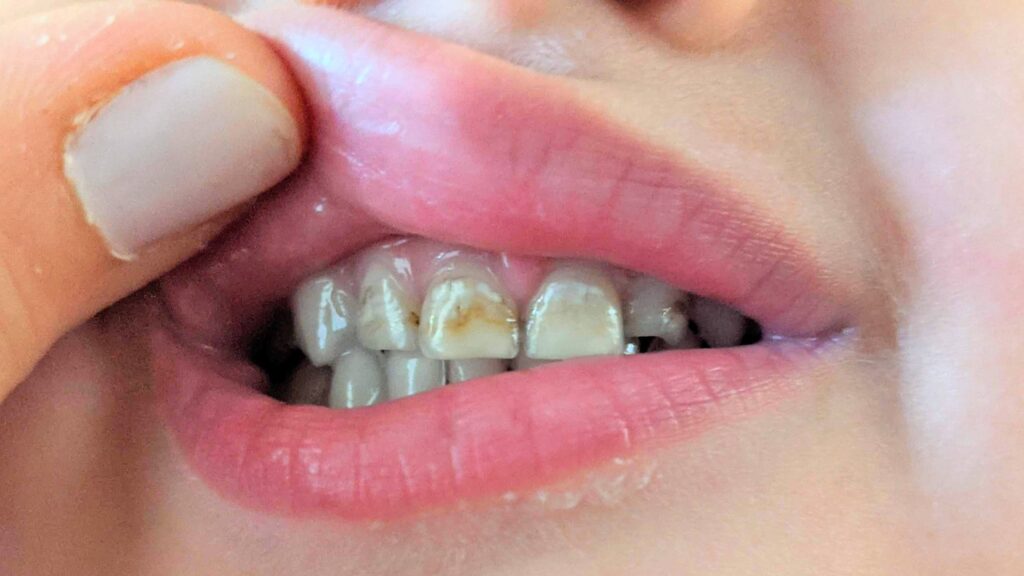
If your child falls and hits their mouth, it can sometimes cause a tooth to change color, turning gray, yellow, or even blue. This happens when there’s some internal bleeding or damage to the tooth while it’s still growing. It usually affects just one or two teeth. You should consult your dentist and have them look at the affected teeth.
6. Enamel Hypoplasia
In this condition, the outer layer of the tooth (enamel) doesn’t form properly and is thin or weak. It might be due to an illness your child had early in life, poor nutrition, or even genetics.
The result? Teeth that look yellow, white, or brown in spots are more prone to tooth decay. These teeth often look patchy or uneven in color.
7. Orthodontic Treatment
Braces can make it tricky for kids to brush and floss properly. Food and plaque can easily get stuck around the brackets and wires, and if not cleaned well, it can cause white spots (decalcification) or stains caused by braces. These are early signs of enamel damage. And, if your child eats a lot of sugary snacks and doesn’t clean their braces thoroughly, staining becomes even more likely.
8. Genetics and Medical Conditions
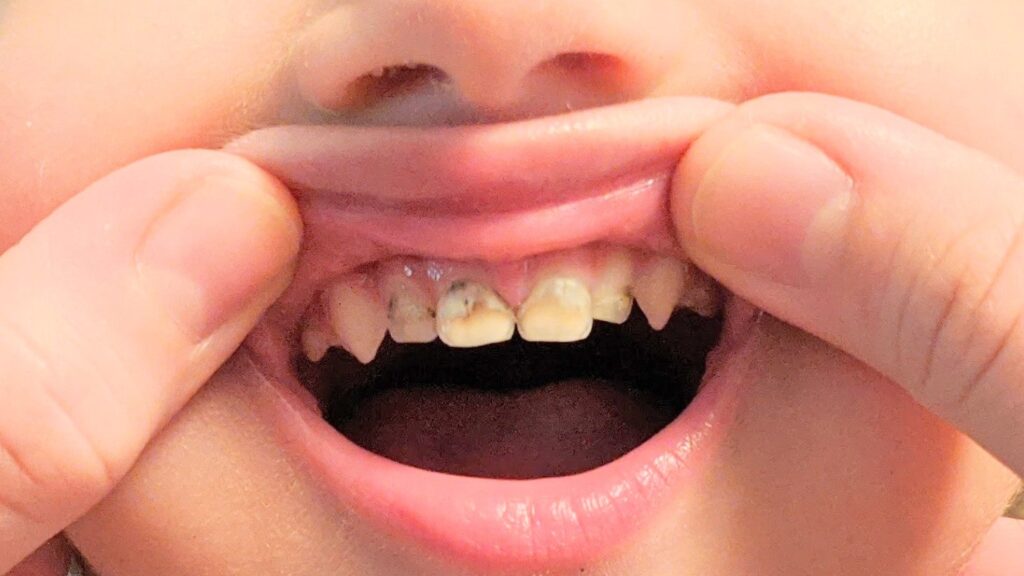
Sometimes, teeth discoloration just runs in the family. Some kids naturally have teeth that are a little darker or yellower than others. In rare cases, medical conditions like dentinogenesis imperfecta can cause teeth to look bluish-gray, translucent, or amber-colored. These conditions usually affect both baby and adult teeth and may require special dental care.
Treatment Options for Discolored Teeth
Once you know what’s causing your child’s teeth to look discolored, you can start thinking about the treatment options for discolored teeth. The good news? Many types of tooth discoloration in kids can be improved or even reversed, especially if caught early. Treatment depends on the cause, the age of the child, and whether it’s a surface stain or something deeper.
See results from kids natural cavity treatment in this post.
Some of the most common treatment options for discolored teeth are:
1. Professional Dental Cleaning
Sometimes, the solution is as simple as a good professional cleaning at the dentist’s office. If your child has surface stains from food, drinks, or plaque buildup, a dental hygienist can clean and polish their teeth to remove them. This is usually the first step if the discoloration is external (on the outside of the teeth). Kids often leave with visibly brighter smiles after just one visit!
2. Fluoride Management
If the discoloration is caused by too much fluoride (like in cases of fluorosis), your dentist might suggest a few changes at home. This could include switching to a fluoride-free toothpaste for a while or being extra careful about how much toothpaste your child uses; just a tiny pea-sized amount is enough!
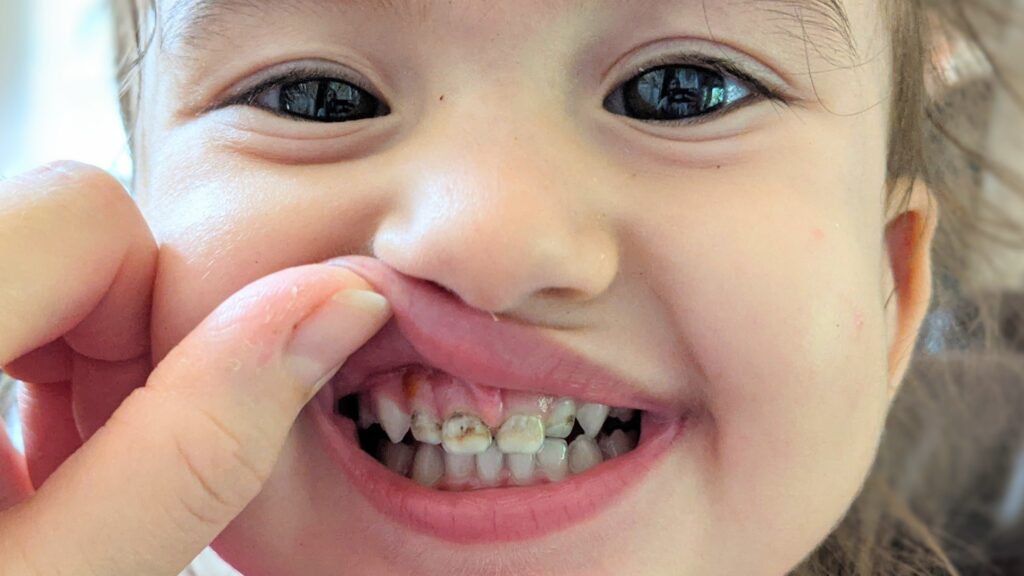
Your dentist might also adjust or stop any fluoride supplements. The key here is balance: Fluoride is great for preventing cavities, but too much during the early years can cause staining and discoloration of teeth in kids.
3. Whitening Treatments (if Age-Appropriate)
Whitening treatments are not usually recommended for very young children if they still have baby teeth. However, mild whitening or polishing treatments may be considered for older kids or teens, especially those with permanent teeth. These are always done under the supervision of a dentist and are typically very gentle. It’s not about achieving a movie star smile; rather, it’s just about safely lightening any mild stains.
Read here to find out how I naturally whitened the stains on my daughter’s teeth.
4. Restorative Options for Severe Discoloration
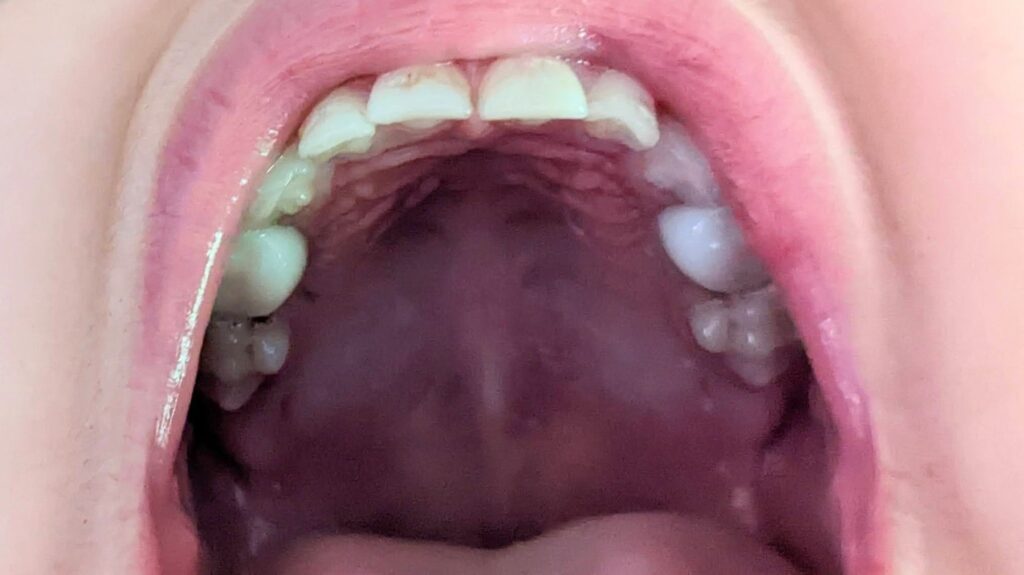
If the staining is deep inside the tooth (like from trauma or enamel defects), surface treatments like whitening won’t help. In those cases, your dentist might recommend restorative options like dental bonding, veneers, or crowns.
How Parents Can Prevent Teeth Discoloration in Children
Prevention is always better than a cure, which also applies to oral hygiene. Instead of waiting for problems to appear, you can follow a few simple daily habits to prevent teeth discoloration in children.
- Make sure your child brushes their teeth twice a day using a soft-bristled toothbrush and just a pea-sized amount of toothpaste.
Check out this extra soft eco-friendly kids bamboo toothbrush by Wonder Oral Wellness.
- Keep an eye on them while they brush until they’re able to do it properly on their own.
- Start daily flossing as soon as any two of their teeth begin to touch.
- If your child has braces or aligners, help them clean around them using interdental brushes or a water flosser.
- Try to limit dark-colored drinks like grape juice, soda, or sports drinks, as they can stain your child’s teeth.
- Only give fluoride supplements if your dentist recommends them—too much fluoride can do more harm than good.
- Take your child for regular dental checkups every six months to catch any issues early and keep their smile healthy.
- Offer a healthy, balanced diet with plenty of fruits, veggies, and dairy to help build strong teeth and support healthy growth.
Conclusion
While teeth discoloration in children can be worrying, most cases are harmless and manageable. By understanding the causes of teeth discoloration in children and choosing the right treatment options for discoloration, you can help your child maintain a bright, confident smile.
And remember, it’s never too early to start good habits. With a little attention and the help of your family dentist, you can prevent teeth discoloration in children and set the foundation for lifelong oral health.
Read More about childhood tooth Health:
- Early Childhood Tooth Decay: Surprising Causes & Treatments
- Natural Treatments for ECC (Early Childhood Caries)
- Tooth Decay in Children: 3 Simple, Natural Treatments
- Healthy Candy for Kids with Tooth Decay
- Kids Dental Crowns – Are There Alternatives?
- Results of Natural Cavity Treatment in Kids
- Is Nano-Hydroxyapatite Safe? What You Need to Know About the Remineralizing Ingredient in Your Child’s Toothpaste
- Best Hydroxyapatite Kids Toothpaste Options
Author Bio
Dr. Satish Pai is an orthodontist and Ivy League-trained dentist who has served as a faculty at Columbia University. As the Partner at Brite Orthodontics, he is dedicated to providing the best orthodontic treatments to his patients. He also writes to educate people about everything orthodontics and the importance of correctly aligned teeth, along with good oral health.








Leave a Reply